
Scale loss
Scales form a protective barrier that, together with the skin, shields fish from infections and helps maintain osmoregulatory balance. Scales can be lost during handling events, crowding, pumping, netting, delousing operations, and interactions with other fish. Scale loss can lead to osmoregulatory problems, particularly when extensive.
| Level 0 | Level 1 | Level 2 | Level 3 |
|---|---|---|---|
|
No visible scale loss |
Loss of many individual scales |
Several small or larger areas of scale loss |
Scale loss dominates the overall impression of the fish |
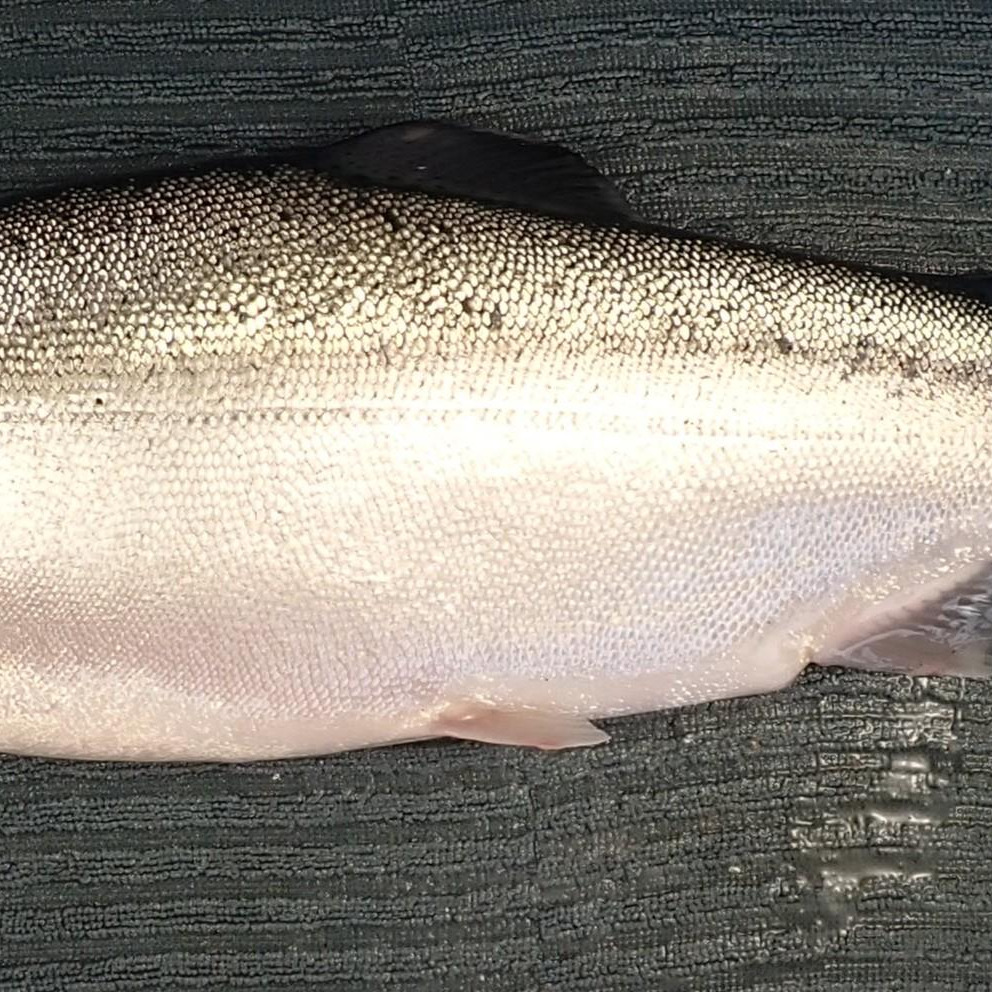
Healthy rainbow trout with no scale loss89
|
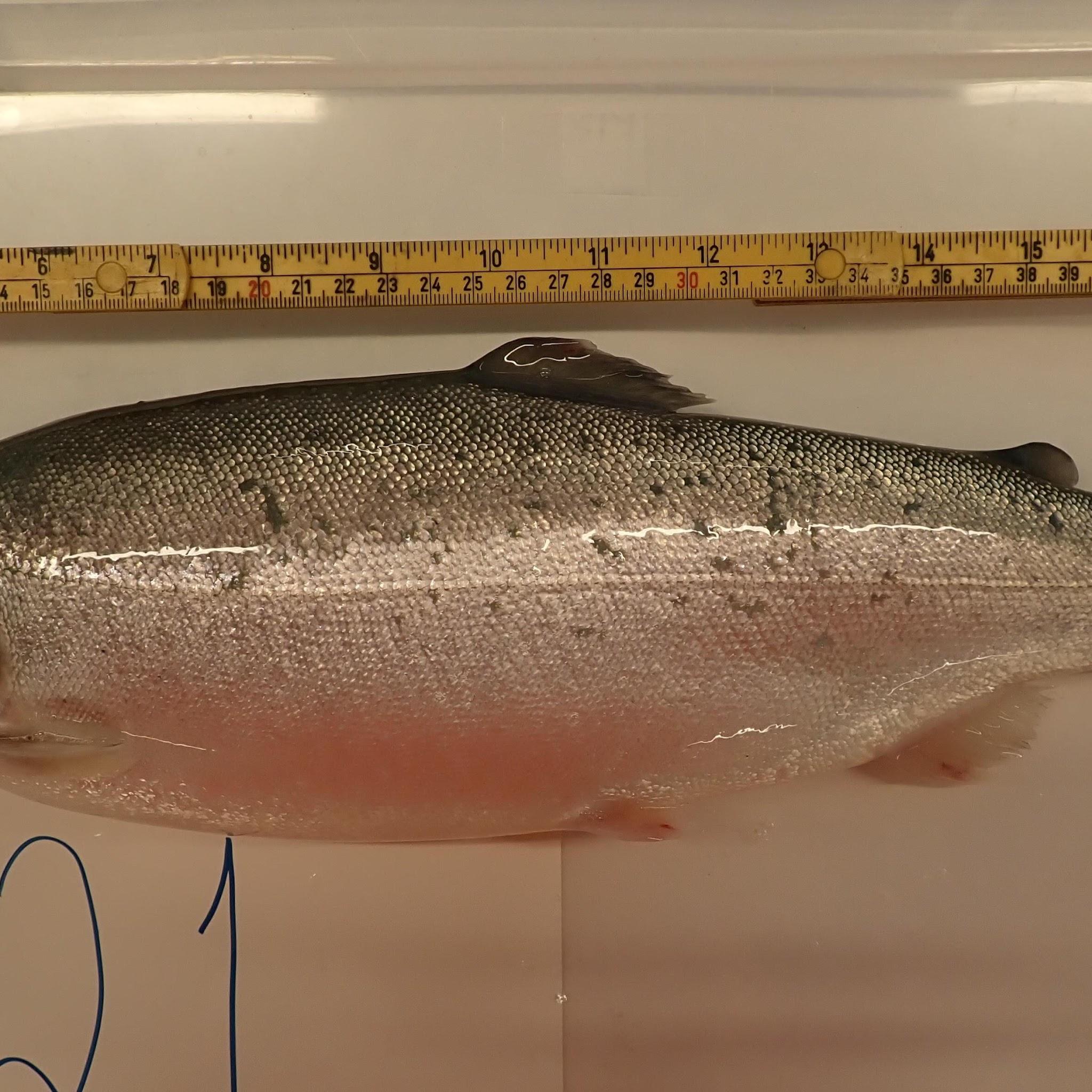
Rainbow trout with minor scale loss90
|
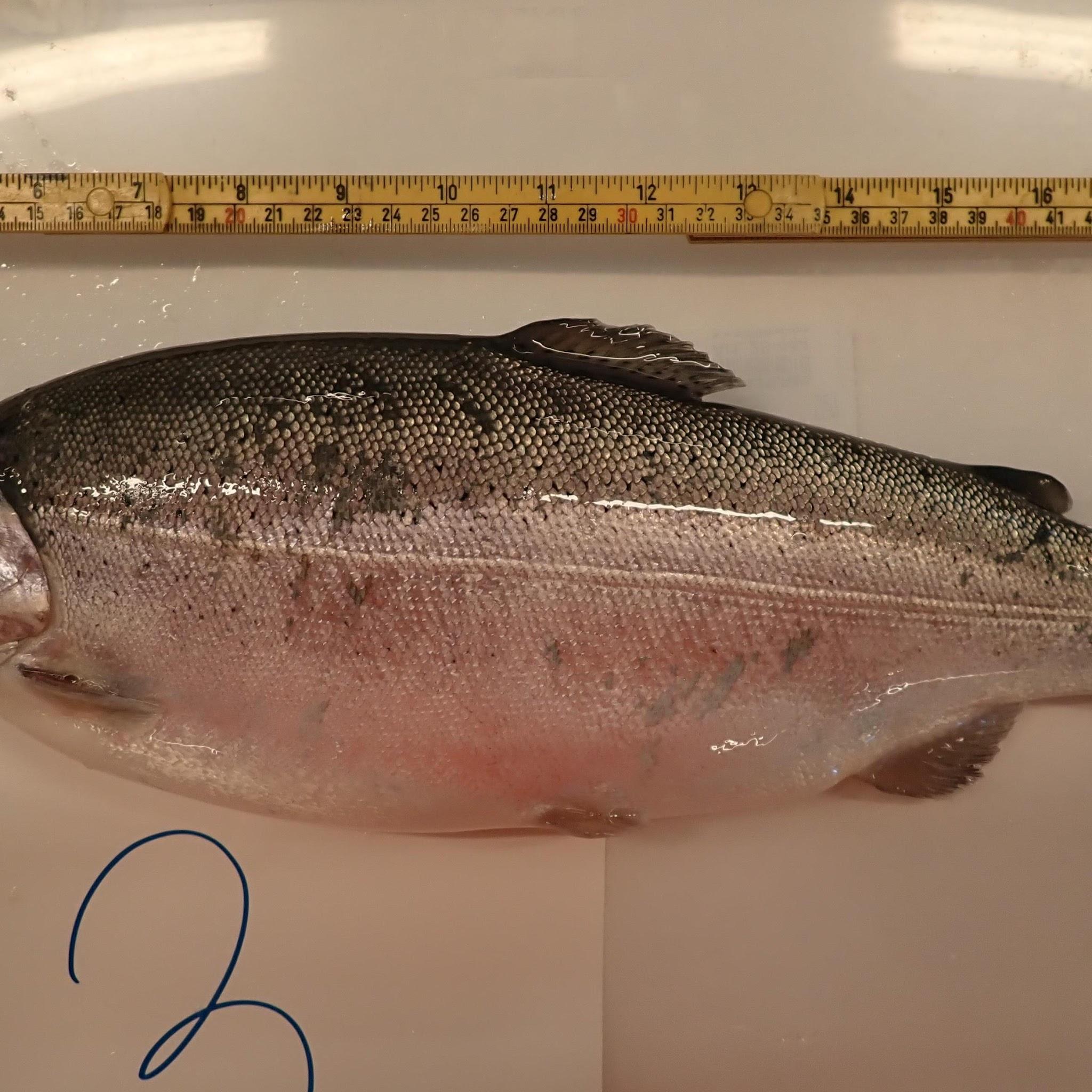
Rainbow trout with moderate scale loss91
|
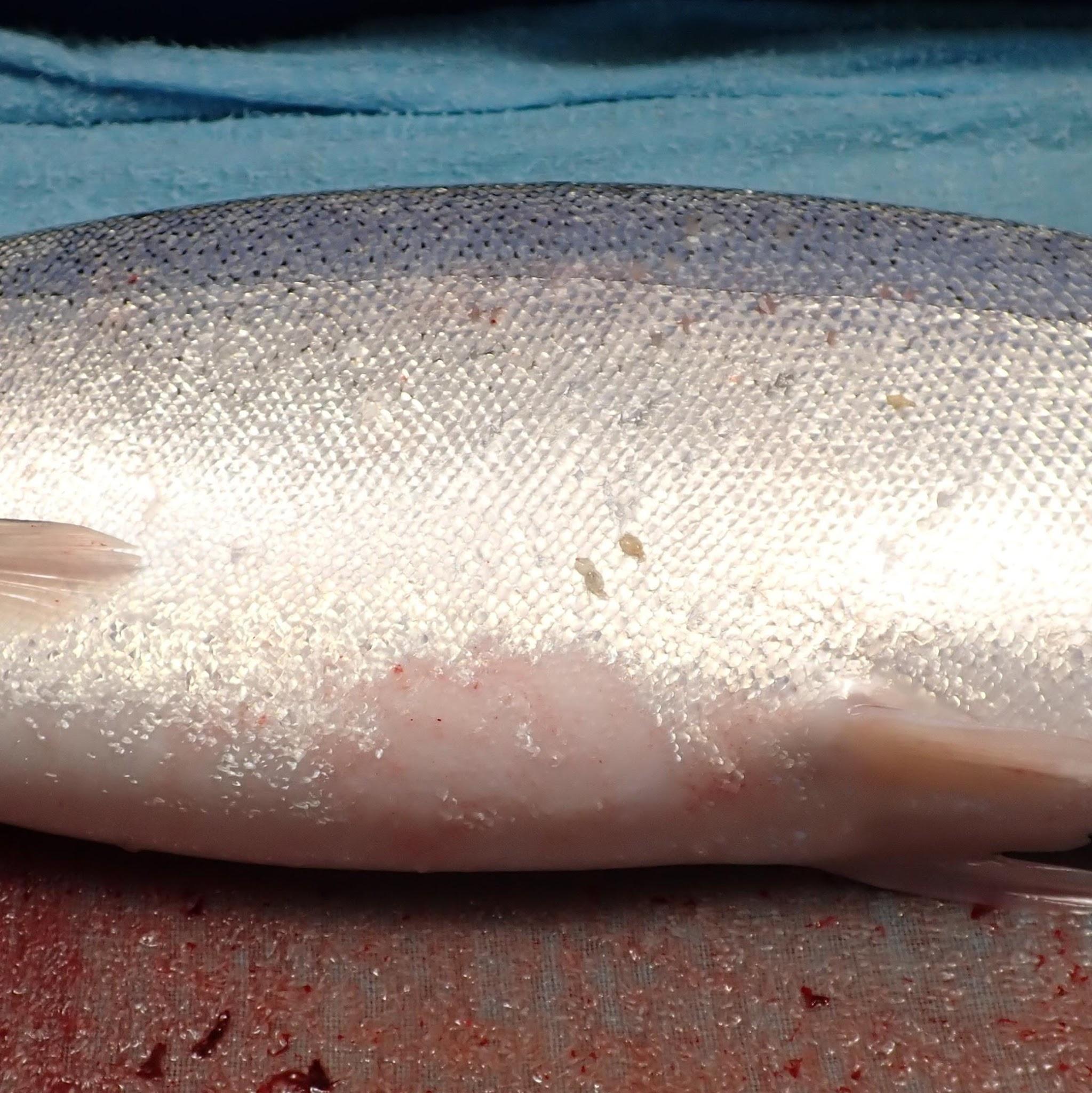
Rainbow trout with scale loss over the rib cage92
|
Protocol application
Assessment requires handling the fish for close inspection of the body surface.
Calculate the distribution of scores across the thresholds within the sample.
Scoring notes
- Scale loss of 20% of the entire body can serve as a rough guide to distinguish between level 2 and level 3 scale loss.
- Scales floating in the water indicate that scale loss is a problem.
- Scale loss over the rib cage carries a high risk due to its proximity to vital organs and therefore warrants at least a level 2 score.
- Validation: This scoring system has been adapted from the Laksvel scoring system for Atlantic salmon.
Key evidence
| Source | Summary of source | Key result |
|---|---|---|
| Bouck and Smith, 1979 | Experimental study investigating the effects of slime and scale removal on smolted coho salmon (~12cm fork length) in laboratory conditions over 10 days. After scale or slime removal, fish were held in either freshwater or seawater for 10 days, with at least 20 fish per treatment group. An additional experiment allowed fish to recover in freshwater for 1–5 days after 25% scale removal, then transferred to seawater. The control group experienced no scale or slime removal. |
In the control group, approximately 32% of smolts died after direct transfer to seawater, establishing a baseline mortality. Mortality increased with descaling: 10% scale loss resulted in approximately 50% mortality, and 25% scale loss resulted in approximately 75% mortality after 10 days in seawater. Scale-removal treatments did not cause mortality in freshwater. In the recovery groups, smolts with 25% scale removal held in freshwater for 1 day before seawater transfer had 10% mortality, whereas those held for 5 days had 0% mortality. Scale removal over the rib cage caused the highest mortality, attributed to the proximity to internal body organs. |
| Nilsson and Madaro, 2025 | Experimental study investigating the effect of controlled scale loss on physiology and growth in 480 Atlantic salmon (146 g) over 6 weeks in laboratory conditions. There were 4 treatment groups of 0%, 5%, 10% and 20% scale loss. Scales were removed from the left dorsal side using a blunt spatula. On the same day as descaling, fish in each treatment group were transferred from freshwater to either brackish water (25 ppt) or seawater (34 ppt) conditions. The temperature was controlled at 10°C. Fish were sampled on days 1, 7, and 42. |
No negative welfare impacts of descaling were detected. There was zero mortality, and scale loss did not affect specific growth rate at either salinity. There was no relationship between cortisol, glucose, or lactate levels and descaling levels. No wounds were observed at any point, and by day 42, new scales had regrown to nearly their original size. The authors noted the same effects may not be observed under the more challenging conditions in commercial settings. For example, there were no temperature fluctuations, pathogen exposure, biological stressors, low oxygen levels, waves, or handling. |
| Kostecki et al., 1987 | Experimental study investigating the impacts of scale loss on survival after a turbine passage in Atlantic salmon smolts in commercial conditions and presmolts (45–167 g) in laboratory conditions. Smolts were passed through one of two Ossberger turbines (450 or 850kW). The presmolts were divided into 5 groups with varying levels of scale removal: 0% (control), 10% in the caudal region, 10% in the abdominal region, 20% in the abdominal region, and 30% in the abdominal and dorsal regions. The fish were then held in freshwater for 8 days, followed by half-strength seawater for 4 days. |
In the smolt experiment, fish were grouped as controls (never passed through the turbine), fish that died within 48 hours, and survivors beyond 48 hours. Average scale loss was 15.1% in controls, 24.2% in fish that died, and 15.9% in survivors. Fish that died had significantly more scale loss than survivors or controls. From the presmolts, only the group that had lost 30% of scales showed elevated mortality. |
Supporting evidence
- Bouck, Gerald R., and Stanley D. Smith. “Mortality of Experimentally Descaled Smolts of Coho Salmon (Oncorhynchus Kisutch) in Fresh and Salt Water.” Transactions of the American Fisheries Society 108, no. 1 (1979): 67–69. https://doi.org/10.1577/1548-8659(1979)108%3C67:MOEDSO%3E2.0.CO;2.
- Kostecki, Paul T., Patricia Clifford, Steven P. Gloss, and James C. Carlisle. “Scale Loss and Survival in Smolts of Atlantic Salmon (Salmo salar) after Turbine Passage.” Canadian Journal of Fisheries and Aquatic Sciences 44, no. 1 (January 1987): 210–14. https://doi.org/10.1139/f87-028.
- Moltumyr, Lene, Jonatan Nilsson, Angelico Madaro, Tore Seternes, Fredrik Agerup Winger, Ivar Rønnestad, and Lars Helge Stien. “Long-Term Welfare Effects of Repeated Warm Water Treatments on Atlantic Salmon (Salmo salar).” Aquaculture 548 (February 15, 2022): 737670. https://doi.org/10.1016/j.aquaculture.2021.737670.
- Nilsson, Jonatan, and Angelico Madaro. “Descaling Did Not Affect Osmoregulation, Growth or Mortality in Atlantic Salmon Smolts after Transfer to Brackish or Sea Water.” Aquaculture 605 (July 15, 2025). https://doi.org/10.1016/j.aquaculture.2025.742526.
- Nilsson, Jonatan, Kristine Gismervik, Kristoffer Vale Nielsen, Martin Haugsmo Iversen, Chris Noble, Jelena Kolarevic, Hilde Frotjold, et al. 2025. “Laksvel — a Standardised, Operational Welfare Monitoring Protocol for Atlantic Salmon Held in Sea Cages.” Institute of Marine Research. https://www.hi.no/en/hi/nettrapporter/rapport-fra-havforskningen-en-2025-40.
- Noble, C., K. Gismervik, M. H. Iversen, J. Kolarevic, J. Nilsson, L. H. Stien, and J. F. Turnbull. 2020. “Welfare Indicators for Farmed Rainbow Trout: Tools for Assessing Fish Welfare.” Nofima. https://nofima.no/wp-content/uploads/2020/05/Welfare-Indicators-for-farmed-rainbow-trout-Noble-et-al.-2020.pdf.
- Stien, Lars H., Marc B. M. Bracke, Ole Folkedal, Jonatan Nilsson, Frode Oppedal, Thomas Torgersen, Silje Kittilsen, et al. “Salmon Welfare Index Model (SWIM 1.0): A Semantic Model for Overall Welfare Assessment of Caged Atlantic Salmon: Review of the Selected Welfare Indicators and Model Presentation.” Reviews in Aquaculture 5, no. 1 (March 2013): 33–57. https://doi.org/10.1111/j.1753-5131.2012.01083.x.
- Stien, Lars Helge, Chris Noble, Angelico Madaro, Jonatan Nilsson, René Alvestad, Kristine Gismervik, Ewa Harasimczuk, Hogne Bleie, Karoline Skaar Amthor, and Marc B. M. Bracke. “Reviewing the Severity of Handling-Induced Injuries in the LAKSVEL Protocol for Salmon Welfare.” Reviews in Aquaculture 17, no. 4 (August 14, 2025). https://doi.org/10.1111/raq.70076.
-
Nilsson, Jonatan. 2026. Rainbow trout with no scale loss, score 0. Photograph. Personal communication, Institute of Marine Research.
-
Nilsson, Jonatan. 2026. Rainbow trout with minor scale loss, score 1. Photograph. Personal communication, Institute of Marine Research.
-
Nilsson, Jonatan. 2026. Rainbow trout with moderate scale loss, score 2. Photograph. Personal communication, Institute of Marine Research.
-
Nilsson, Jonatan. 2026. Rainbow trout with severe scale loss, score 3. Photograph. Personal communication, Institute of Marine Research.