
Skin hemorrhaging
The skin is the fish’s largest organ and serves as an essential barrier against pathogens, parasites, and environmental stressors. Skin hemorrhaging prevalence can be strongly influenced by recent events, such as handling, crowding, or transport events. Damage to the skin compromises the skin’s barrier function, leaving fish more susceptible to infection, osmotic stress, and secondary health problems. Minor hemorrhages will primarily reflect recent insults and will resolve in a matter of days or weeks. More serious skin hemorrhages can also indicate underlying disease.
| Level 0 | Level 1 | Level 2 | Level 3 |
|---|---|---|---|
|
No visible hemorrhaging |
A few red spots |
Clear hemorrhaging (< 10% of the body surface) |
Severe hemorrhaging (≥ 10% of the body surface) |
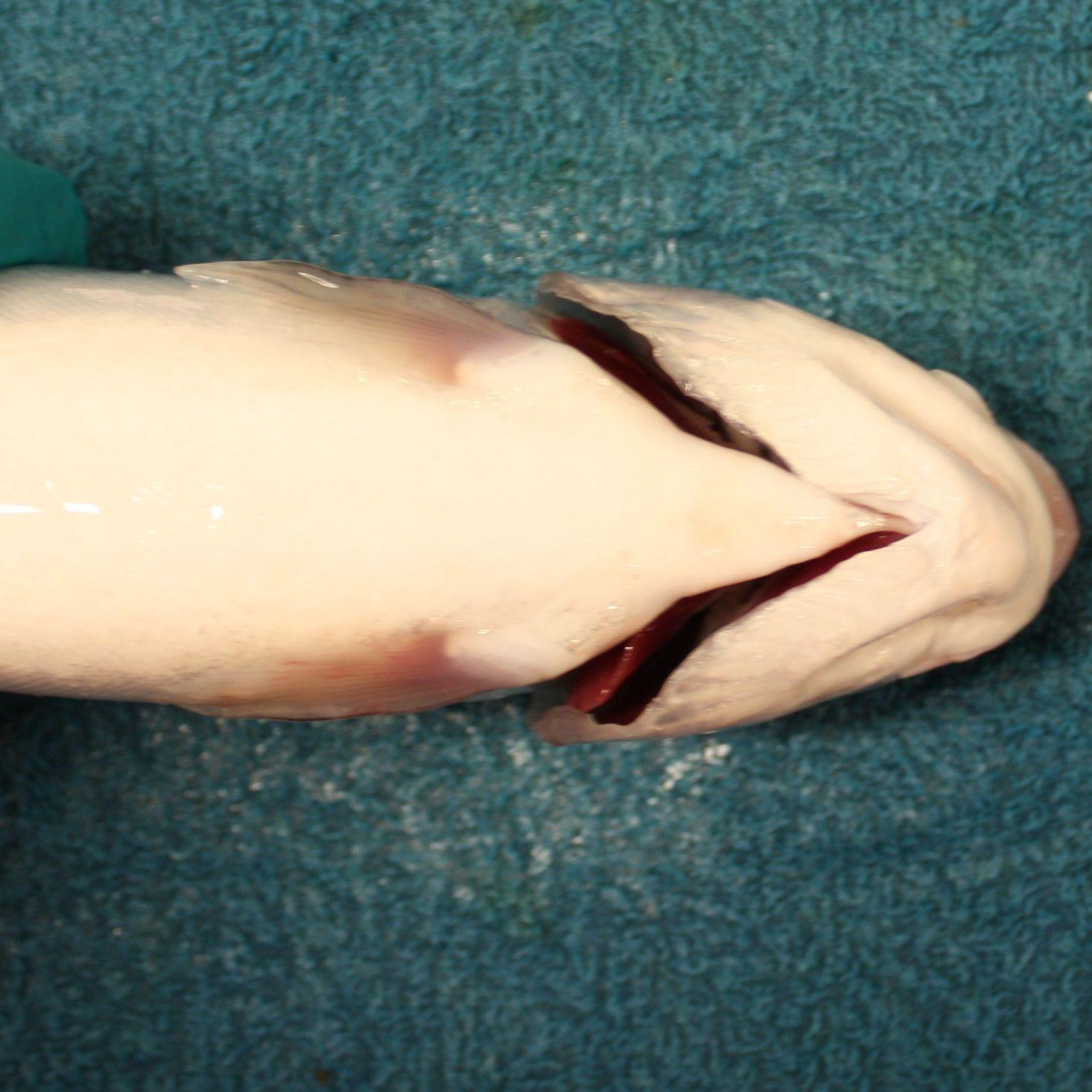
Healthy rainbow trout with no injuries93
|
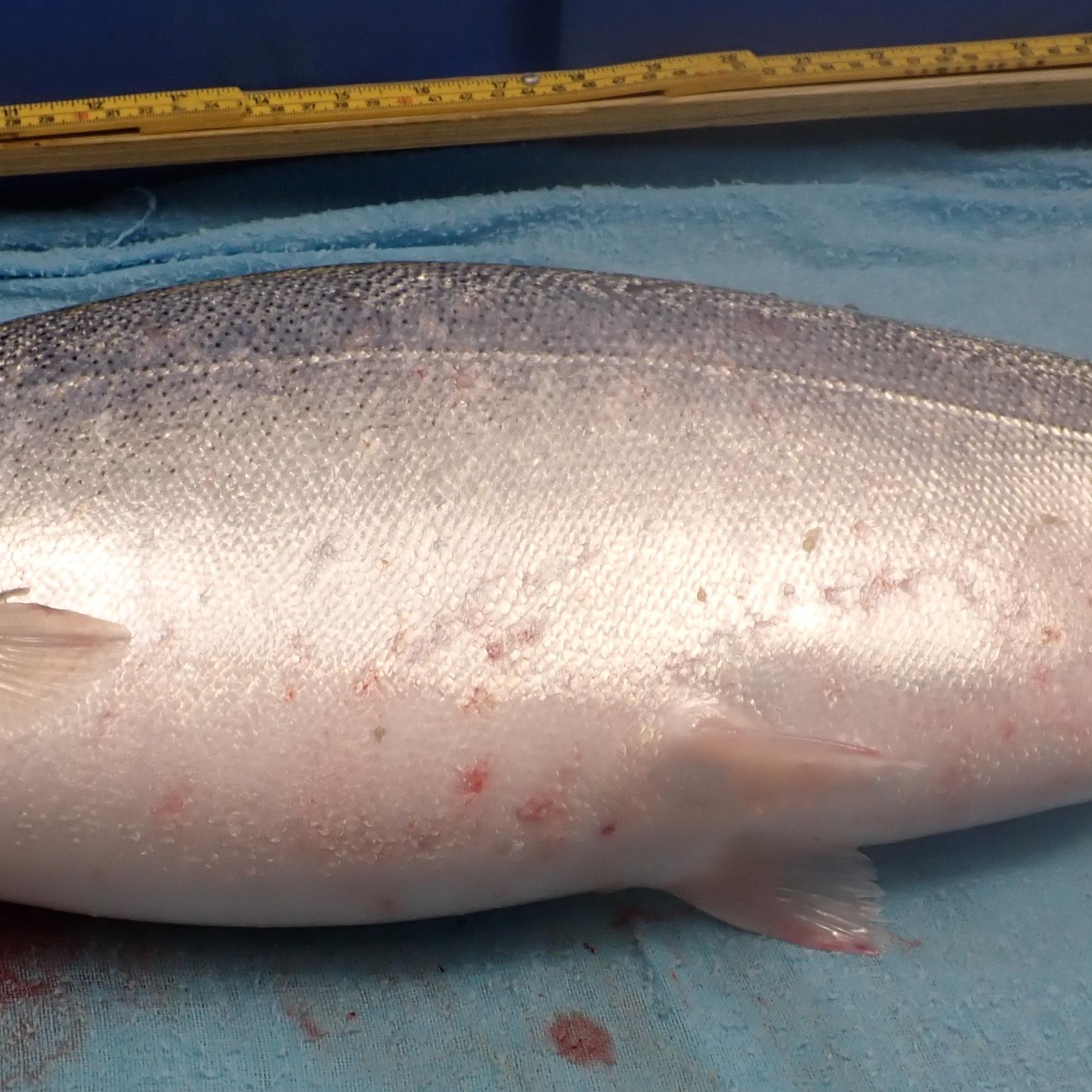
Rainbow trout with a few red spots94
|
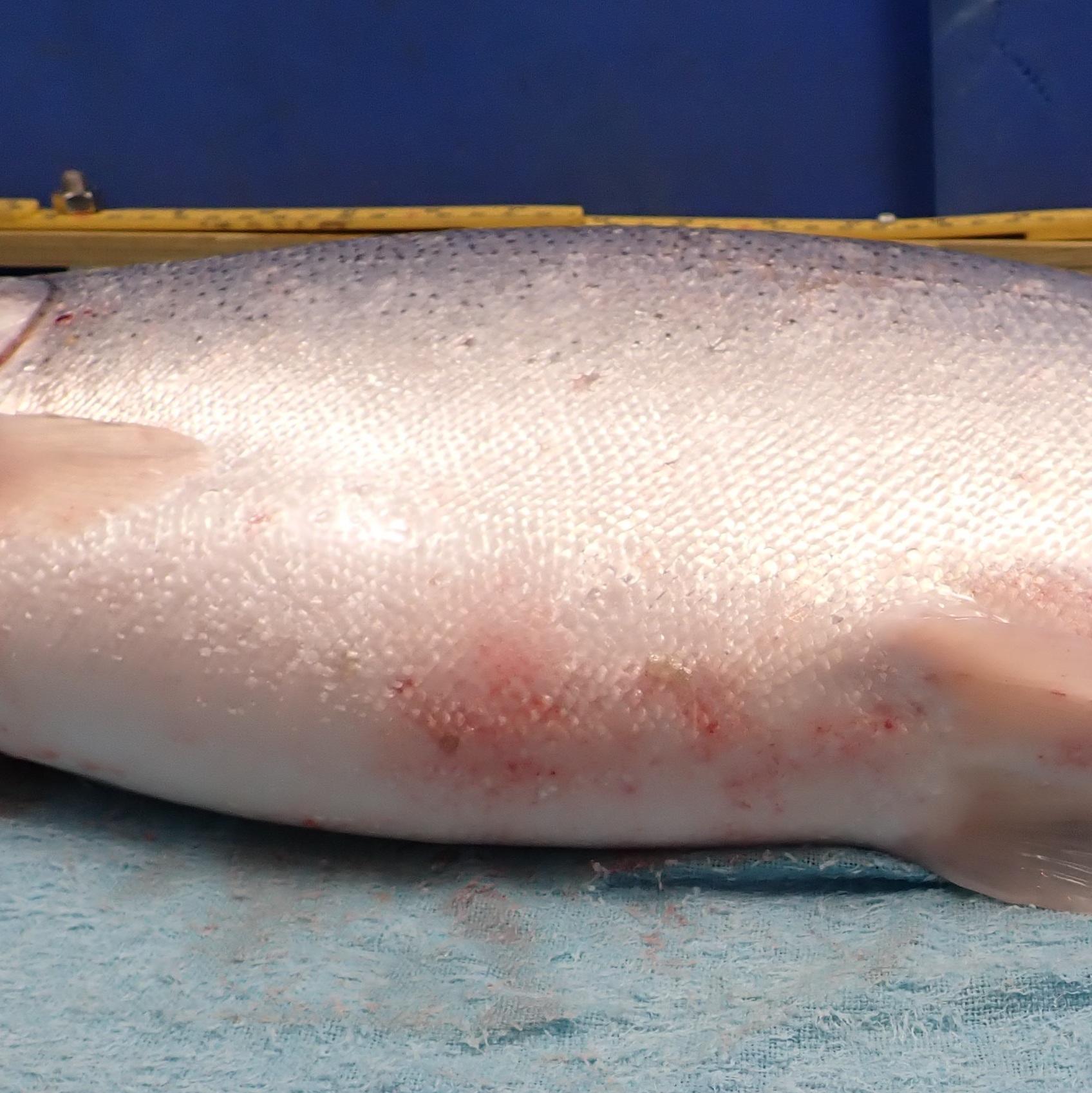
Rainbow trout with clear skin hemorrhaging95
|
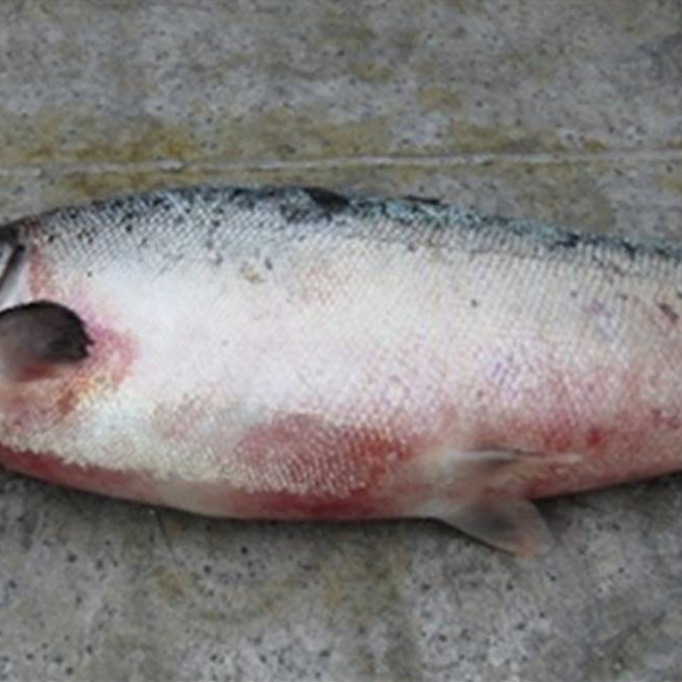
Atlantic salmon with severe skin hemorrhaging96
|
Protocol application
Assessment requires handling the fish. Inspect both sides of the body, as well as the belly of the fish. Try to distinguish between fresh hemorrhages and healed hemorrhages. This indicator addresses visible skin hemorrhaging on the body. To avoid double-counting, hemorrhaging on the fins or at the fin base is scored under fin damage, and hemorrhaging on the snout under snout damage.
Calculate the distribution of scores across the thresholds within the sample.
Scoring notes
- Distinguish between fresh and healed hemorrhages.
- Fresh hemorrhages may have active bleeding, red or pink inflamed spots, potential swelling, or edema, and indicate recent trauma.
- Healed hemorrhages show stable discoloration and/or scar tissue and no active bleeding, indicating the welfare issue has been largely resolved.
- Clear ulcerations, lesions, necrotic tissues, or wounds should be captured under the ‘wounds’ indicator.
- When scoring, note the location of any hemorrhaging (e.g., ventral/rib cage).
- When interpreting results, consider the timing of recent handling activities, which may have caused hemorrhages.
- Validation: This scoring system has been adapted from the Laksvel scoring system for Atlantic salmon. That scoring system reflects the size of the hemorrhage rather than its expected welfare impact.
Key evidence
| Source | Summary of source | Key result |
|---|---|---|
| Schill and Elle, 2000 | Experimental study investigating the healing of electroshock-induced hemorrhages in 1210 juvenile rainbow trout (26–29cm in length) over 36–57 days in freshwater conditions. 502 fish were shocked with a continuous direct current of 375V and 7.5A, then kept in holding pens for 36 days (DC trial). 708 fish were shocked with a pulsed direct current of 325 V, 60 Hz, 25% duty cycle, 7.5A, and then kept in holding pens for 57 days (PDC trial). 50 fish per trial served as controls, handled but not shocked. Hemorrhages were counted and scored on a scale of 0–3. 0 = no hemorrhage; 1 = wound separate from the spine; 2 = wound on spine less than or equal to the width of two vertebrae; and 3 = wound on spine greater than the width of two vertebrae. |
One day after shocking, the DC trial group had 86.1% of fish with at least one hemorrhage, and a mean of 1.86 hemorrhages per fish, while the PDC trial group had 81.6% of fish with at least one hemorrhage and a mean of 1.45 hemorrhages per fish. In both groups, many hemorrhages were initially scored as level 2. By days 8–15, many of these had progressed to level 3. This was explained as the spreading of blood over time, making the lesions larger. Over time, the color changed from bright red to dull red or brown, and the edges faded. In the DC trial, the total number of visible hemorrhages per fish was reduced by 78% by day 36 compared to day 1. In the PDC trial, there was a 92.4% reduction by day 57. Towards the end, many of the remaining injuries were only faint grey areas. |
| Noble et al., 2020 | Literature review on many rainbow trout welfare indicators, including skin damage. | Hemorrhages primarily result from physical trauma, including handling, collisions, pumping, or crowding. Small hemorrhages are typically seen ventrally. |
Supporting evidence
- Nilsson, Jonatan, Kristine Gismervik, Kristoffer Vale Nielsen, Martin Haugsmo Iversen, Chris Noble, Jelena Kolarevic, Hilde Frotjold, et al. 2025. “Laksvel — a Standardised, Operational Welfare Monitoring Protocol for Atlantic Salmon Held in Sea Cages.” Institute of Marine Research. https://www.hi.no/en/hi/nettrapporter/rapport-fra-havforskningen-en-2025-40.
- Noble, C., K. Gismervik, M. H. Iversen, J. Kolarevic, J. Nilsson, L. H. Stien, and J. F. Turnbull. 2020. “Welfare Indicators for Farmed Rainbow Trout: Tools for Assessing Fish Welfare.” Nofima. https://nofima.no/wp-content/uploads/2020/05/Welfare-Indicators-for-farmed-rainbow-trout-Noble-et-al.-2020.pdf.
- Pettersen, Jostein M., Marc B.M. Bracke, Paul J. Midtlyng, Ole Folkedal, Lars H. Stien, Håvard Steffenak, and Tore S. Kristiansen. “Salmon Welfare Index Model 2.0: An Extended Model for Overall Welfare Assessment of Caged Atlantic Salmon, Based on a Review of Selected Welfare Indicators and Intended for Fish Health Professionals.” Reviews in Aquaculture 6, no. 3 (June 30, 2013): 162–79. https://doi.org/10.1111/raq.12039.
- Schill, Daniel J., and F. Steven Elle. “Healing of Electroshock-Induced Hemorrhages in Hatchery Rainbow Trout.” North American Journal of Fisheries Management 20, no. 3 (August 1, 2000): 730–36. https://doi.org/10.1577/1548-8675(2000)020%3C0730:hoeihi%3E2.3.co;2.
- Stien, Lars Helge, Chris Noble, Angelico Madaro, Jonatan Nilsson, René Alvestad, Kristine Gismervik, Ewa Harasimczuk, Hogne Bleie, Karoline Skaar Amthor, and Marc B. M. Bracke. “Reviewing the Severity of Handling-Induced Injuries in the LAKSVEL Protocol for Salmon Welfare.” Reviews in Aquaculture 17, no. 4 (August 14, 2025). https://doi.org/10.1111/raq.70076.
-
Nilsson, Jonatan. 2026. Rainbow trout with no skin hemorrhaging, score 0. Photograph. Personal communication, Institute of Marine Research.
-
Nilsson, Jonatan. 2026. Rainbow trout with minor skin hemorrhaging, score 1. Photograph. Personal communication, Institute of Marine Research.
-
Nilsson, Jonatan. 2026. Rainbow trout with moderate skin hemorrhaging, score 2. Photograph. Personal communication, Institute of Marine Research.
-
Nilsson, Jonatan, Kristine Gismervik, Kristoffer Vale Nielsen, Martin Haugsmo Iversen, Chris Noble, Jelena Kolarevic, Hilde Frotjold, et al. 2025. “Laksvel — a Standardised, Operational Welfare Monitoring Protocol for Atlantic Salmon Held in Sea Cages.” Institute of Marine Research. https://www.hi.no/en/hi/nettrapporter/rapport-fra-havforskningen-en-2025-40.