
Fin damage
Fins are critical for swimming efficiency, maneuverability, balance, maintaining position in water currents, and natural behaviors. Fin damage can reduce swimming performance, feeding efficiency, and the ability to avoid aggression or predators, impacting fish welfare and survival. Fin damage may arise from aggressive fin-nipping, poor water quality, overcrowding, rough handling, or contact with abrasive surfaces, making it a valuable indicator of welfare.
- Different fins serve different purposes, and the impact of damage varies, for example:
- Caudal fin: damage can reduce swimming efficiency.
- Dorsal and anal fins: damage can affect balance and maneuverability.
- Pectoral fins: damage can impair steering, braking, and precise movements.
- Pelvic fins: damage affects stability, but is least critical for survival.
| Level 0 | Level 1 | Level 2 | Level 3 |
|---|---|---|---|
|
No visible damage to the fin |
Minor alteration of the fin |
Clear alteration of the fin |
Severe alteration of the fin |
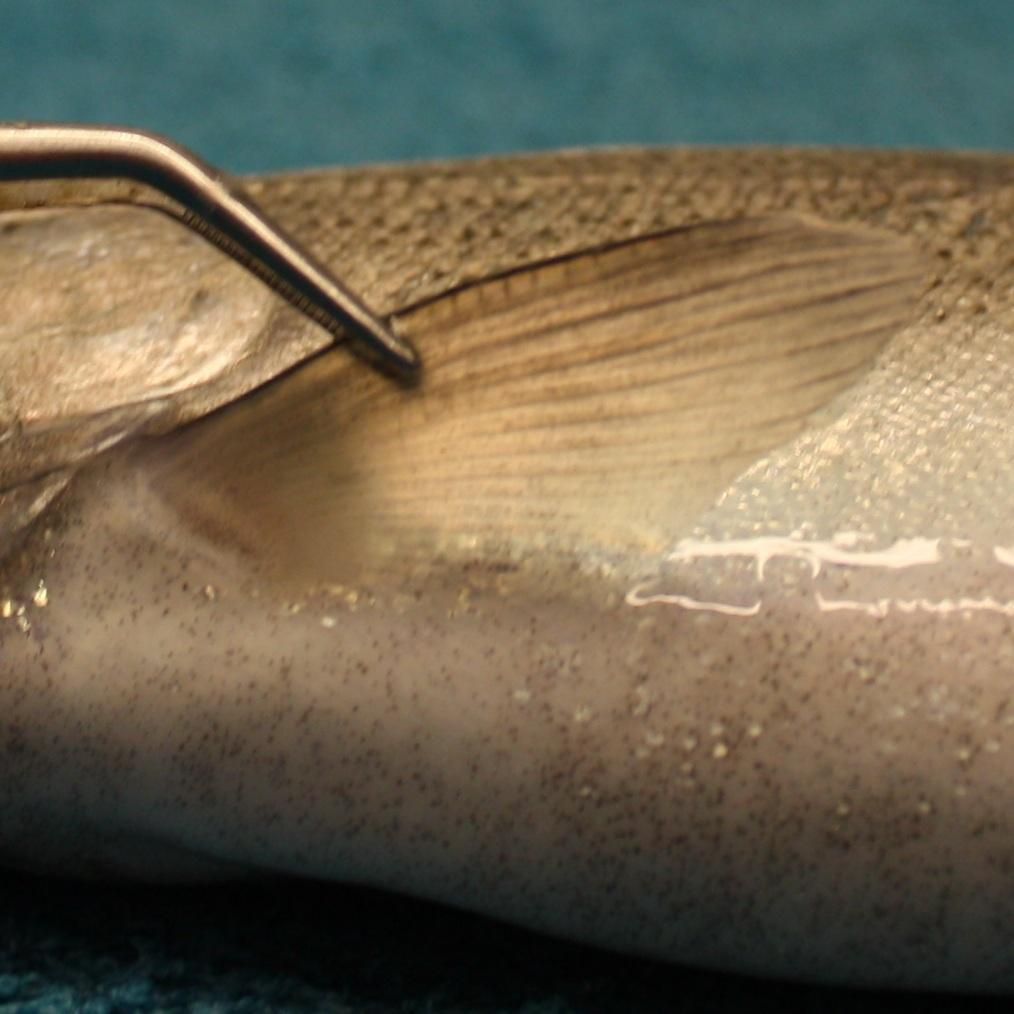
Rainbow trout pectoral fin, score 065
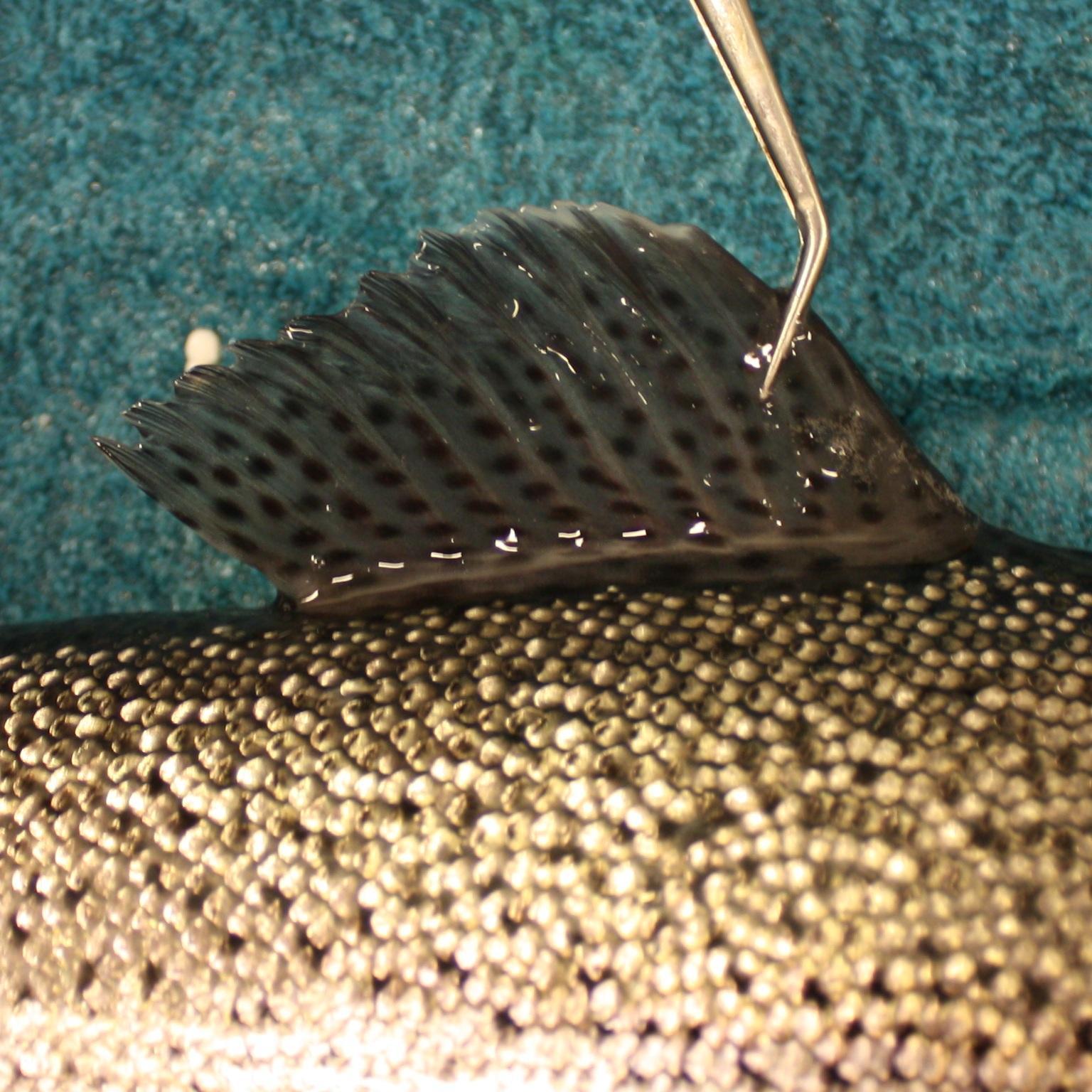
Rainbow trout dorsal fin, score 066
Rainbow trout caudal fin, score 067
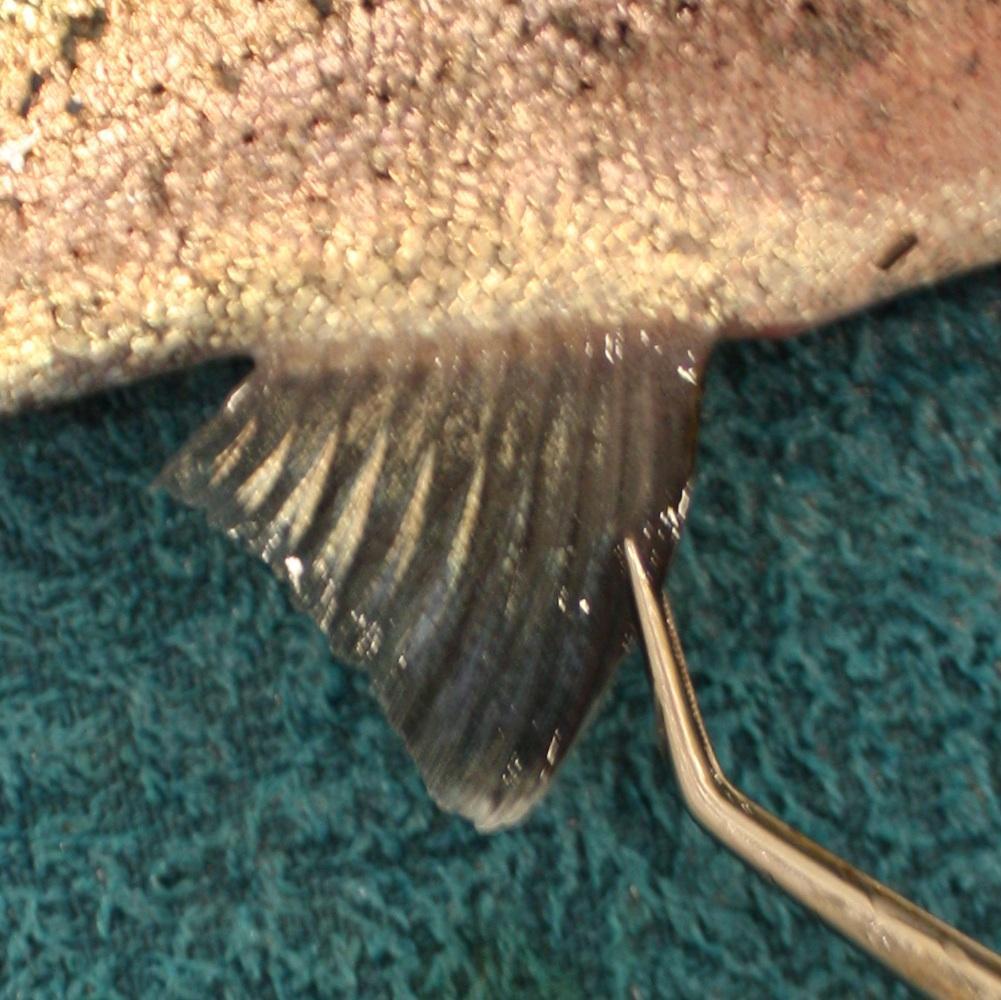
Rainbow trout anal fin, score 068
|
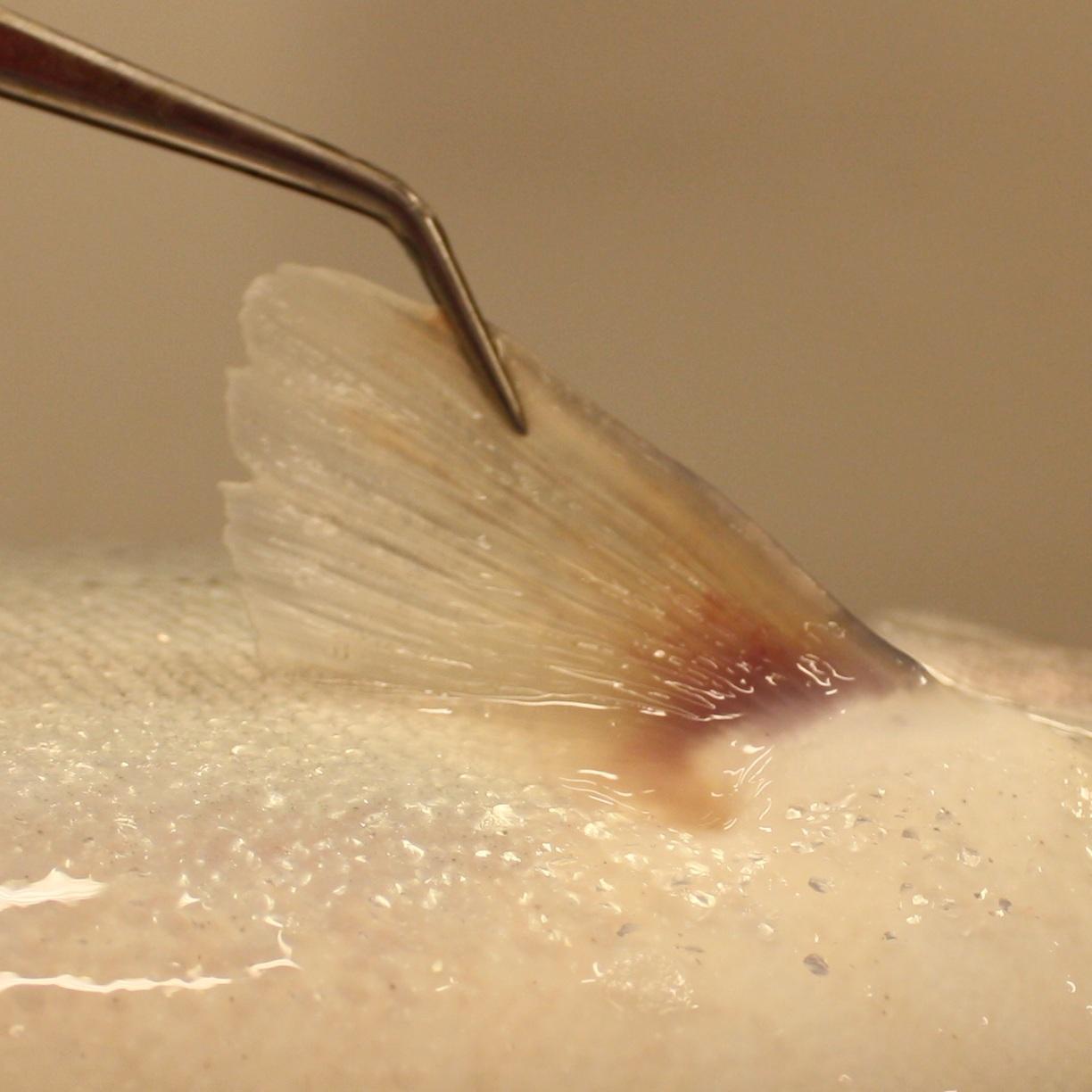
Rainbow trout pectoral fin, score 169
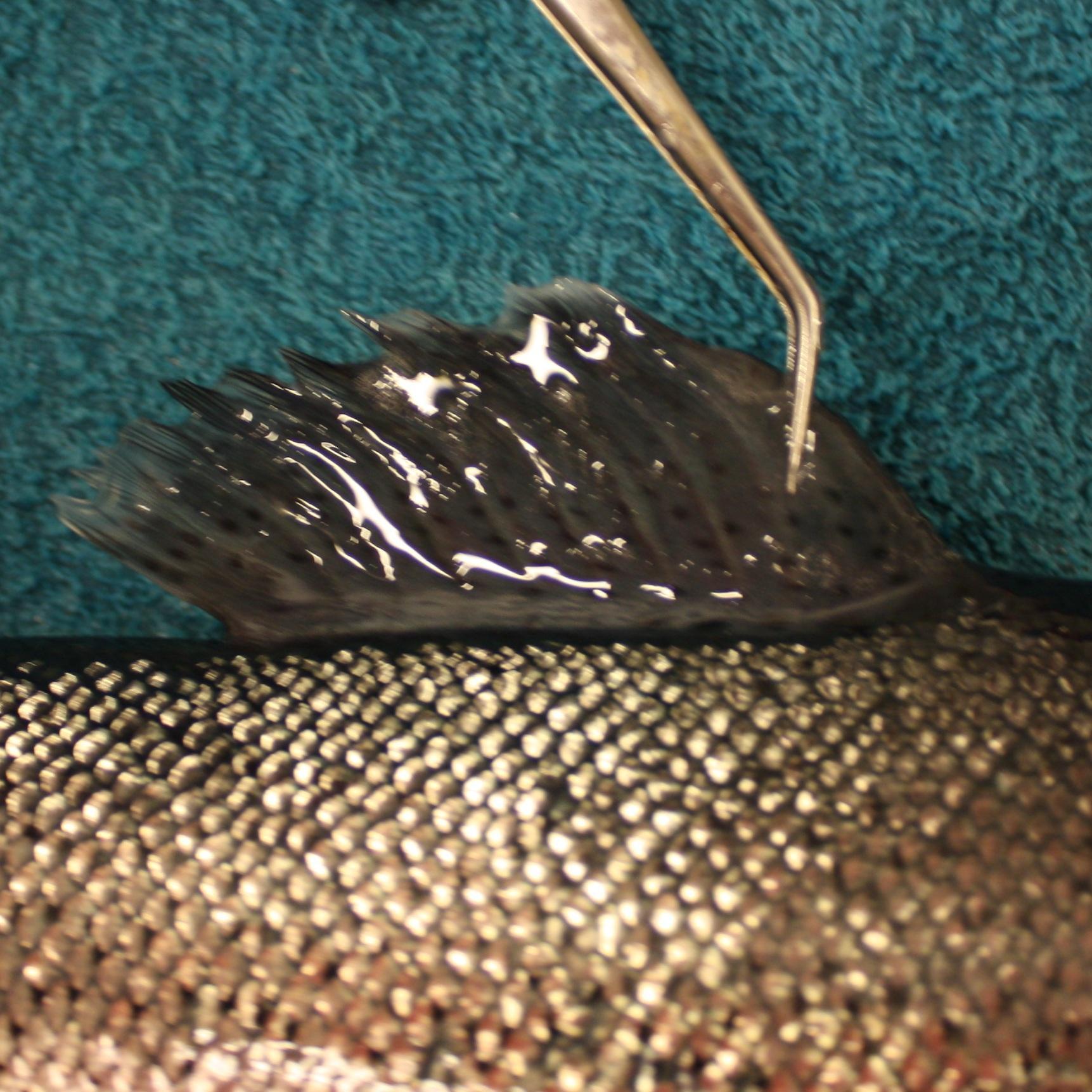
Rainbow trout dorsal fin, score 170
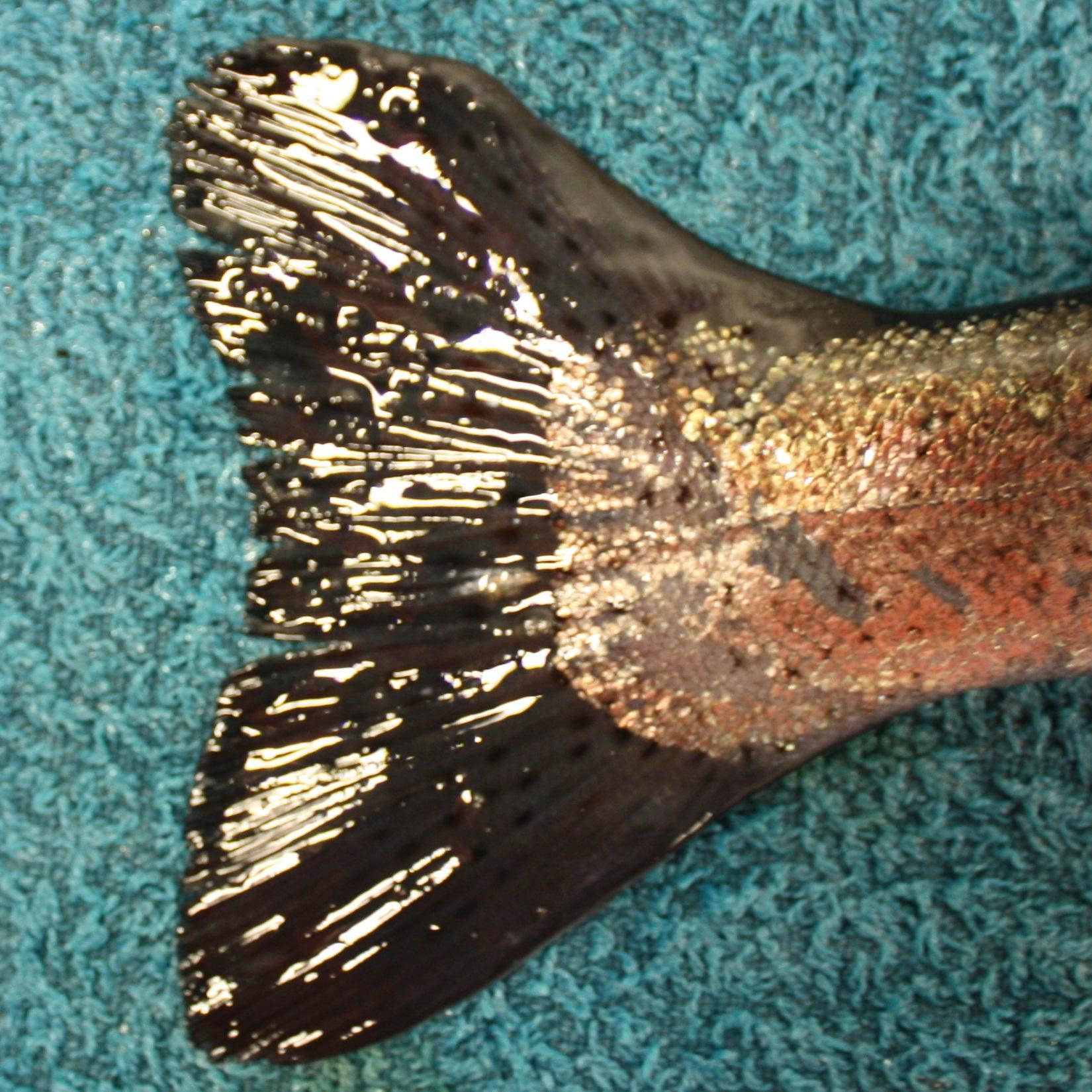
Rainbow trout caudal fin, score 171
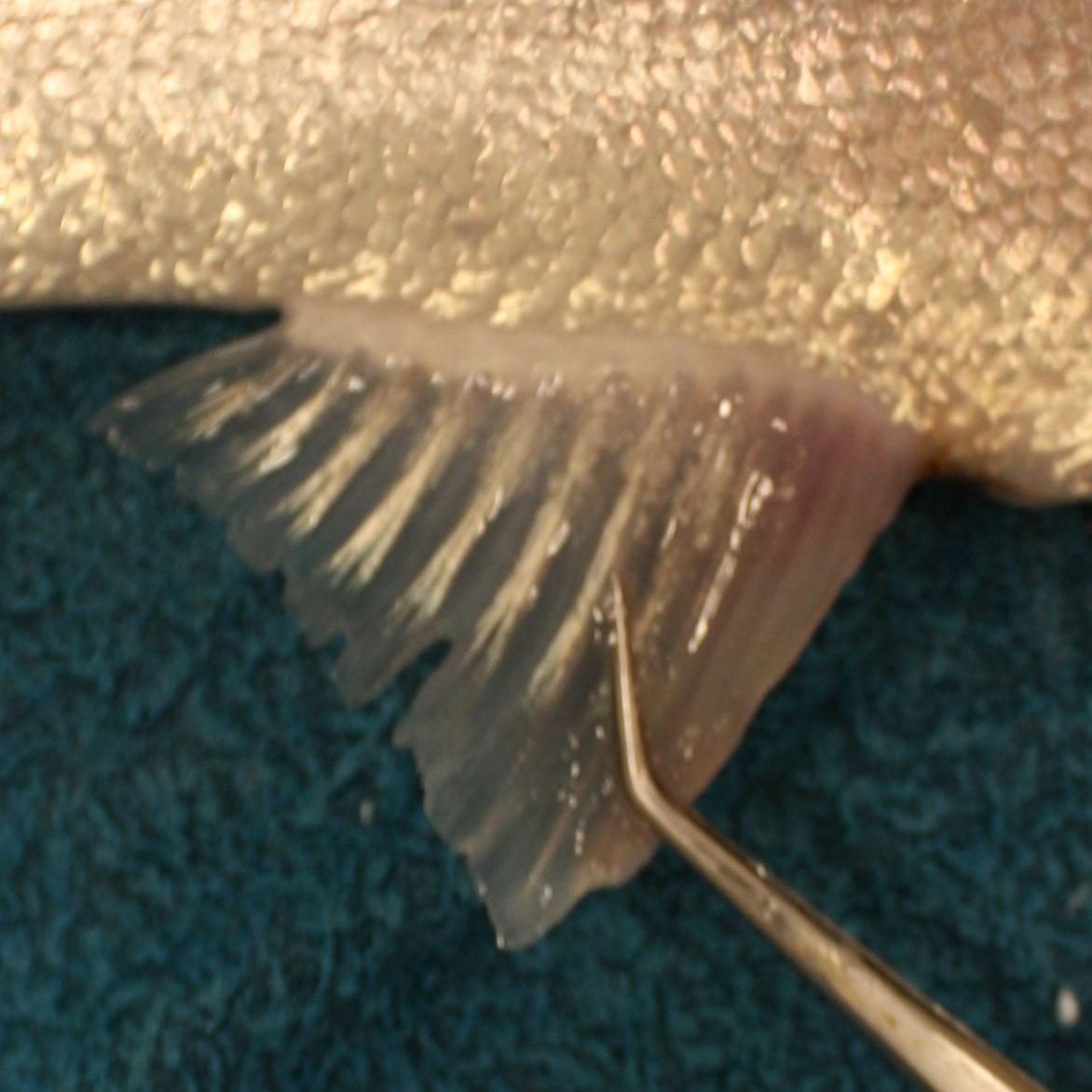
Rainbow trout anal fin, score 172
|
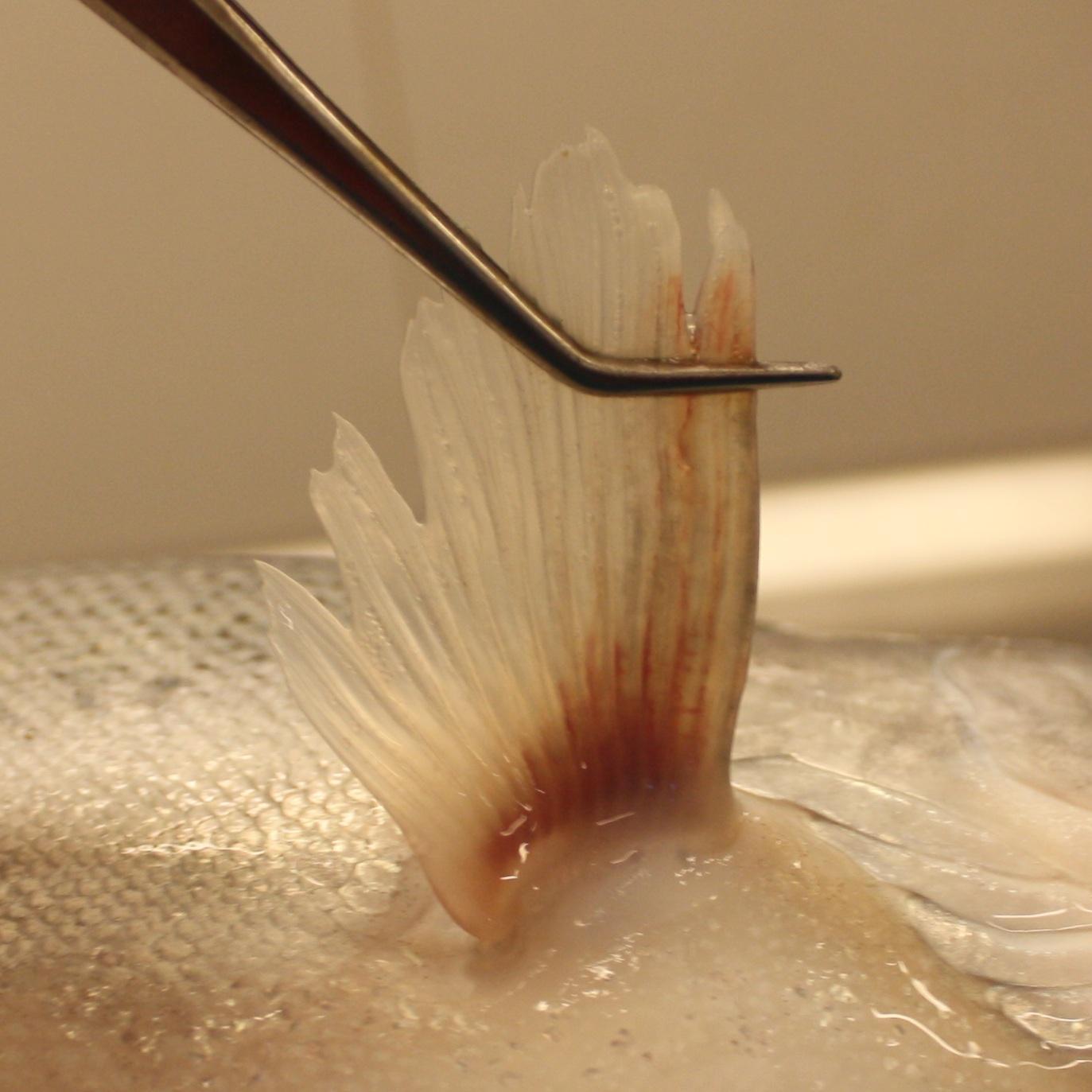
Rainbow trout pectoral fin, score 273
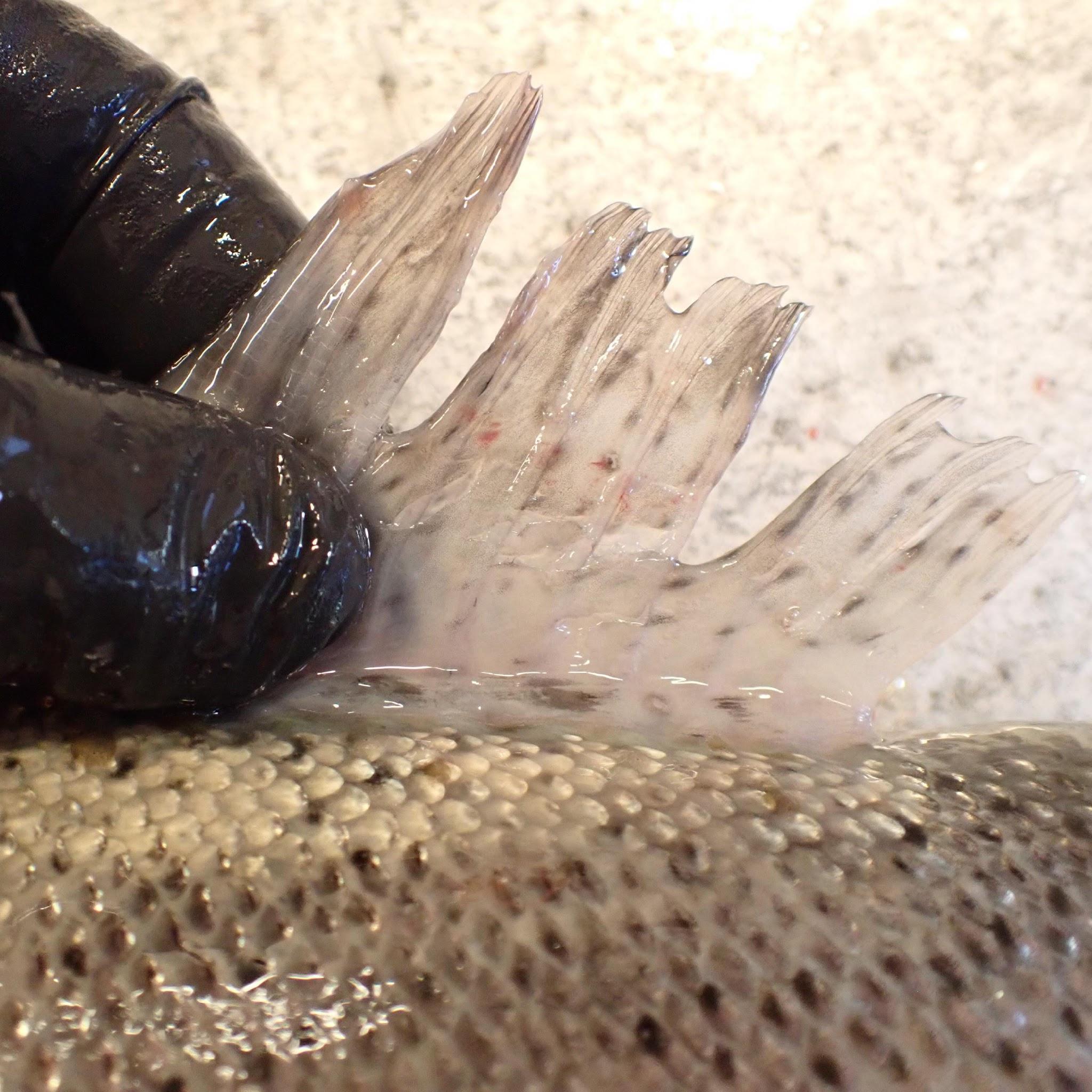
Rainbow trout dorsal fin, score 274
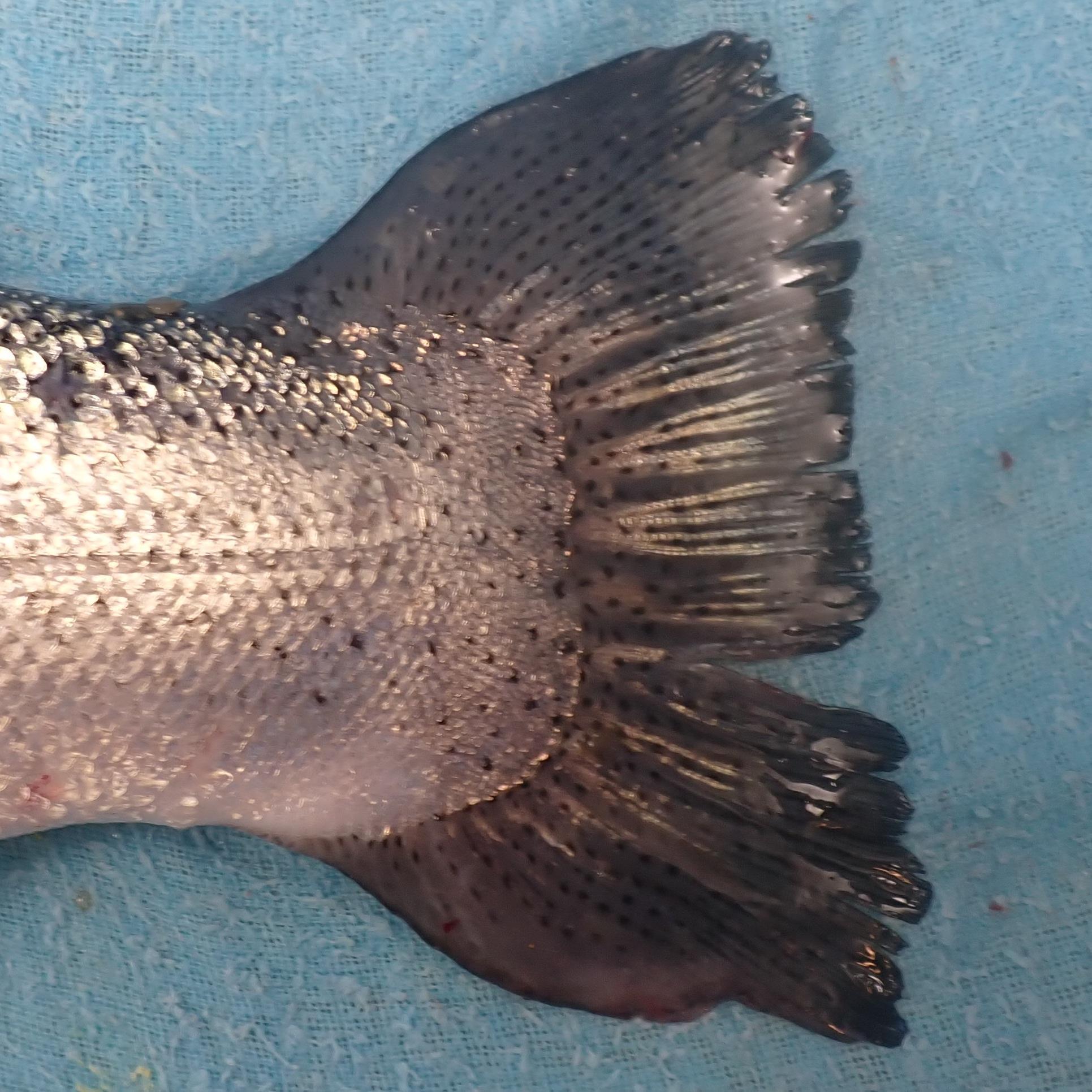
Rainbow trout caudal fin, score 275
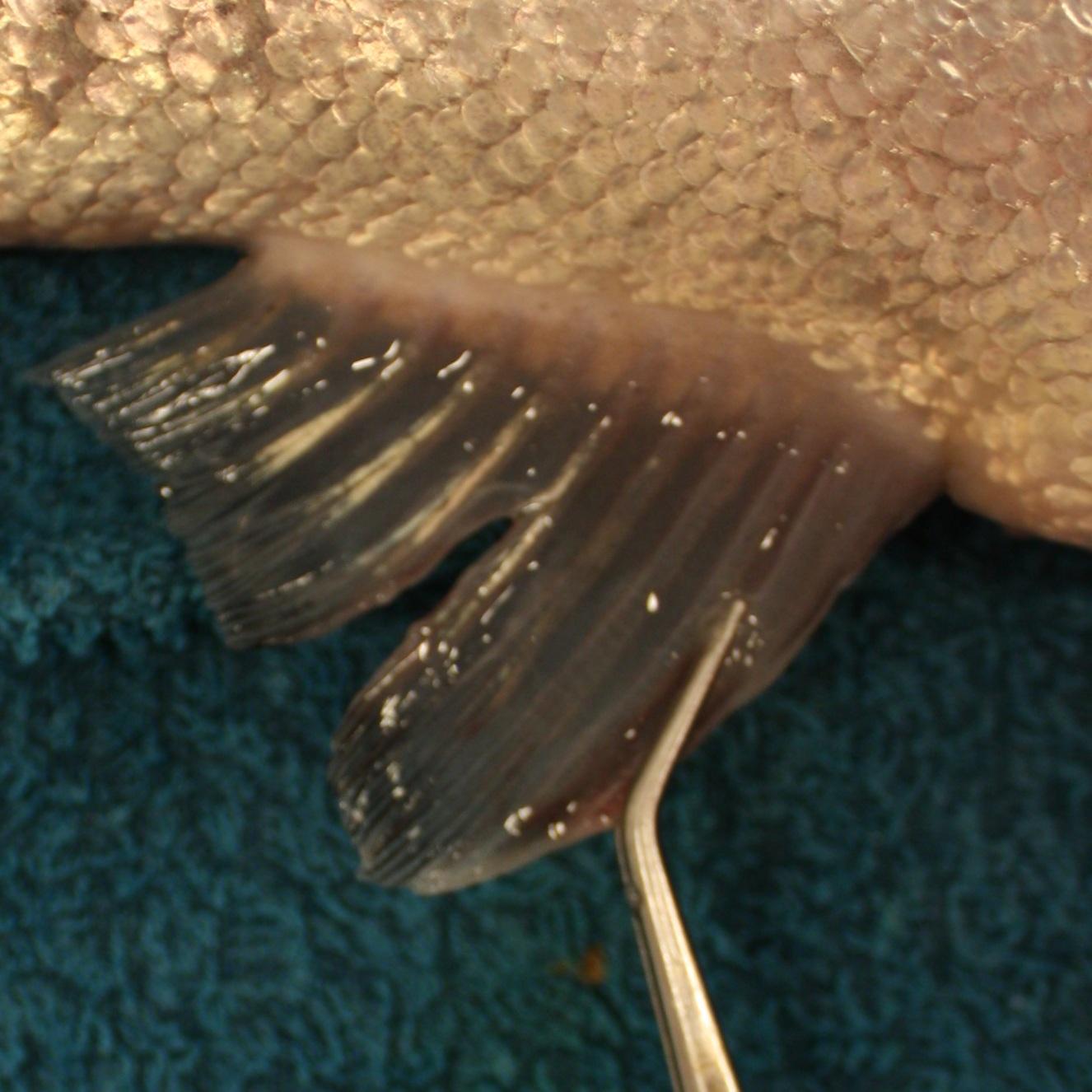
Rainbow trout anal fin, score 276
|
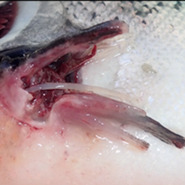
Rainbow trout pectoral fin, score 377
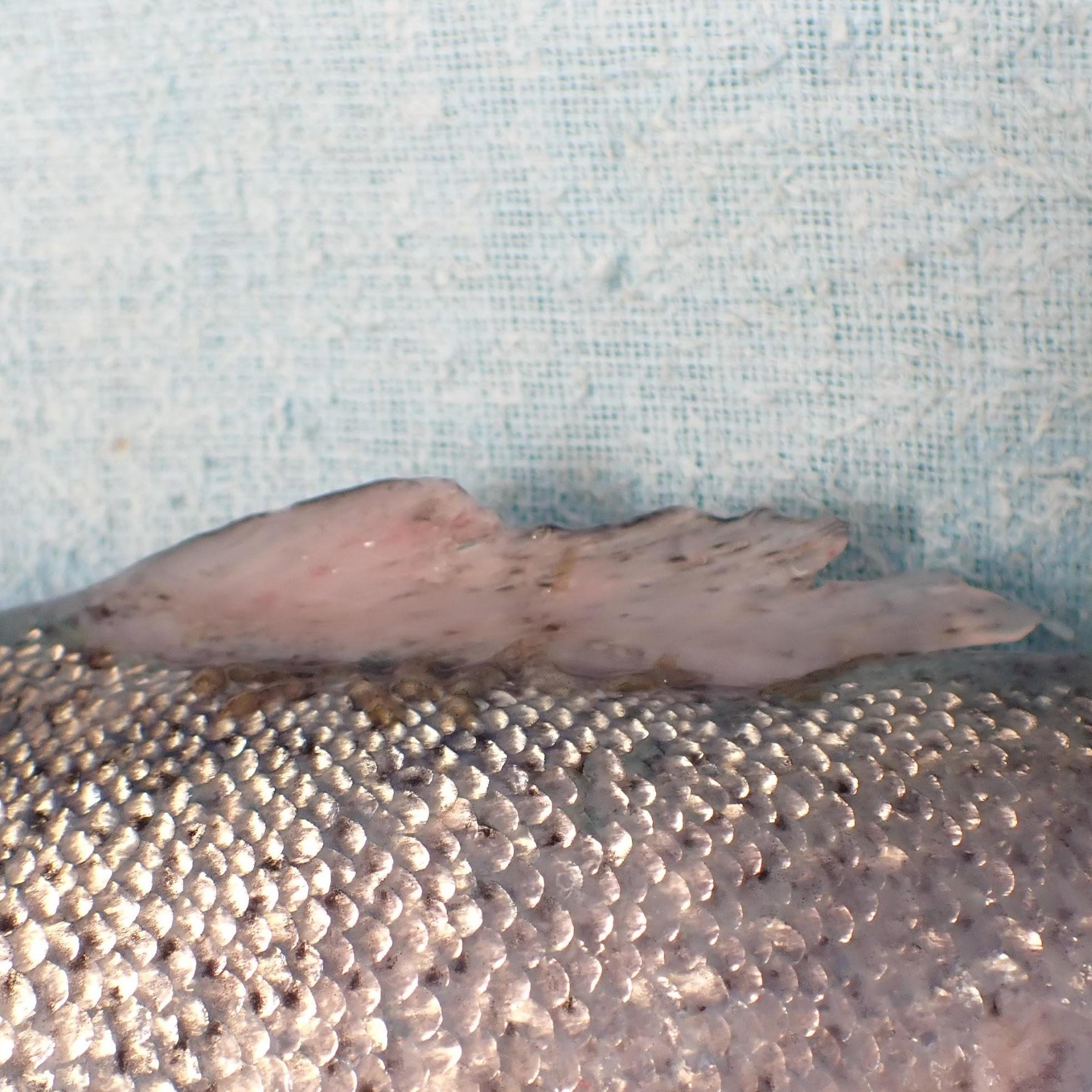
Rainbow trout dorsal fin, score 378
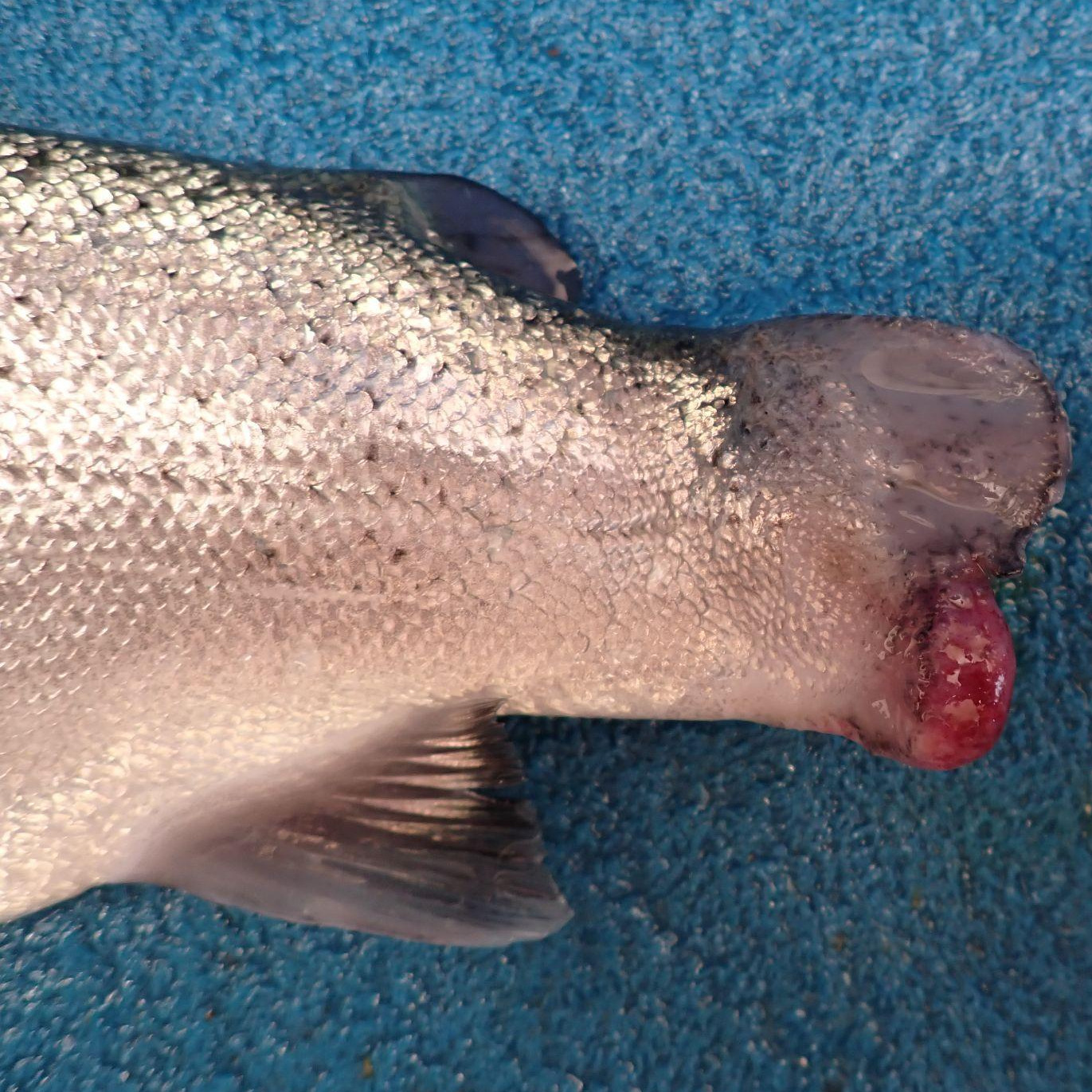
Rainbow trout caudal fin, score 379
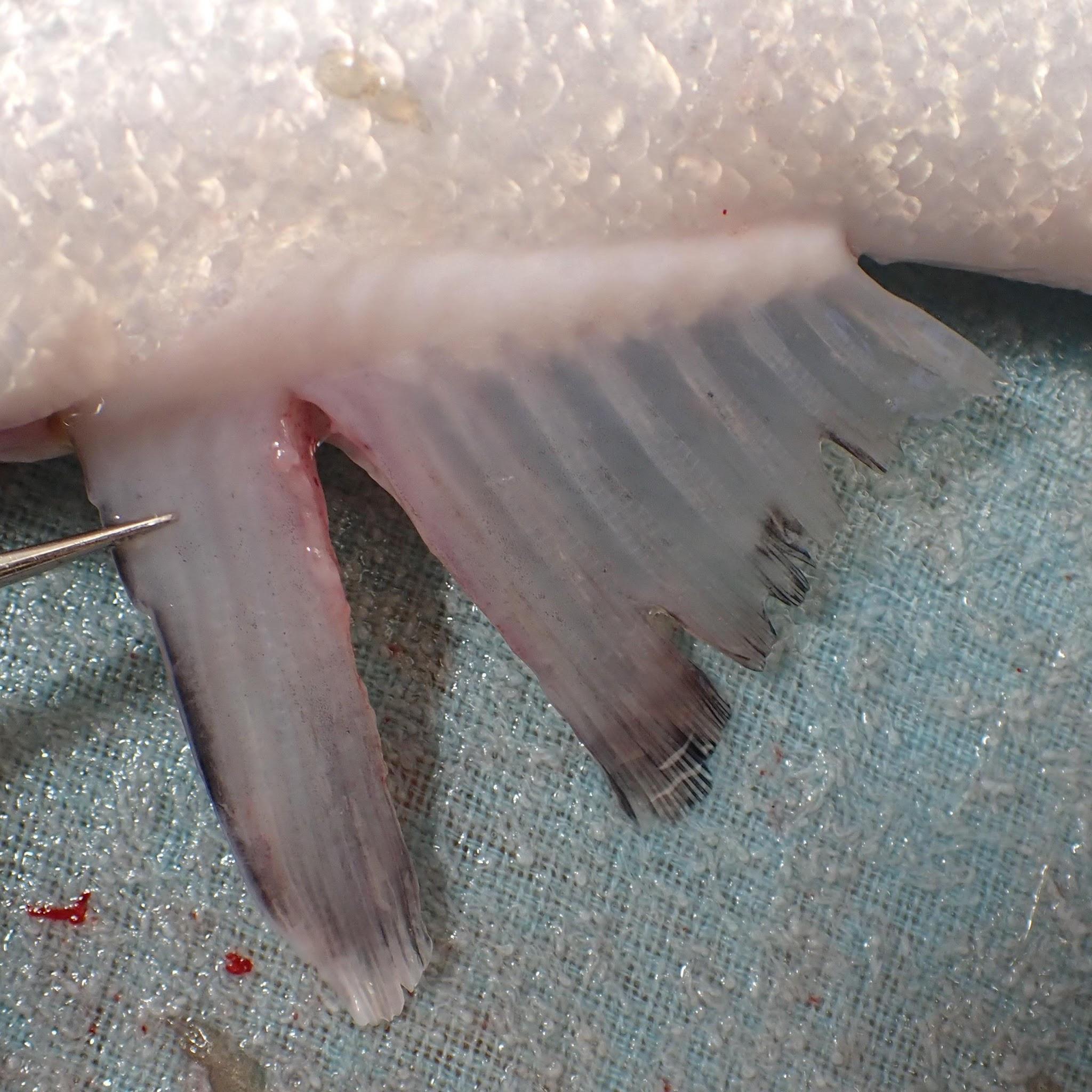
Rainbow trout anal fin, score 380
|
Protocol application
Assessment requires handling the fish. All fins should be examined, which requires turning the fish to inspect both sides.
Score based on the most damaged fin, though recording all fins is recommended to improve data quality.
Calculate the distribution of scores across the thresholds within the sample.
Scoring notes
- In line with the Laksvel scoring system for Atlantic salmon:
- Level 1 damage includes slight fraying, minor erosion, splitting that is < 50% of the fin length, and minor hemorrhaging.
- Level 2 damage includes moderate erosion, clear hemorrhaging, splitting which is ≥ 50% of the fin length, as well as moderate tissue or ray loss.
- Level 3 damage includes severe erosion, extensive splitting, large areas of hemorrhaging, and severe shortening.
- Healed fin injuries that would originally be scored as level 3 are scored as level 2. Healed fin injuries that would originally be scored as level 2 are scored as level 1.
- Damage across multiple fins can indicate systemic issues (chronic aggression, poor water quality, overcrowding, etc.).
- Bilateral cases: Where both fins in a pair (i.e., pectoral or pelvic fins) are scored as level 2 or level 3, the welfare risk is significantly higher than for unilateral cases. If observed, increase monitoring frequency and implement corrective action.
- Validation: Scoring fin damage has been validated specifically for rainbow trout. A macroscopic scoring key was developed and validated by Hoyle et al., (2007) for farmed rainbow trout (below), and fin damage has been well-studied in rainbow trout.
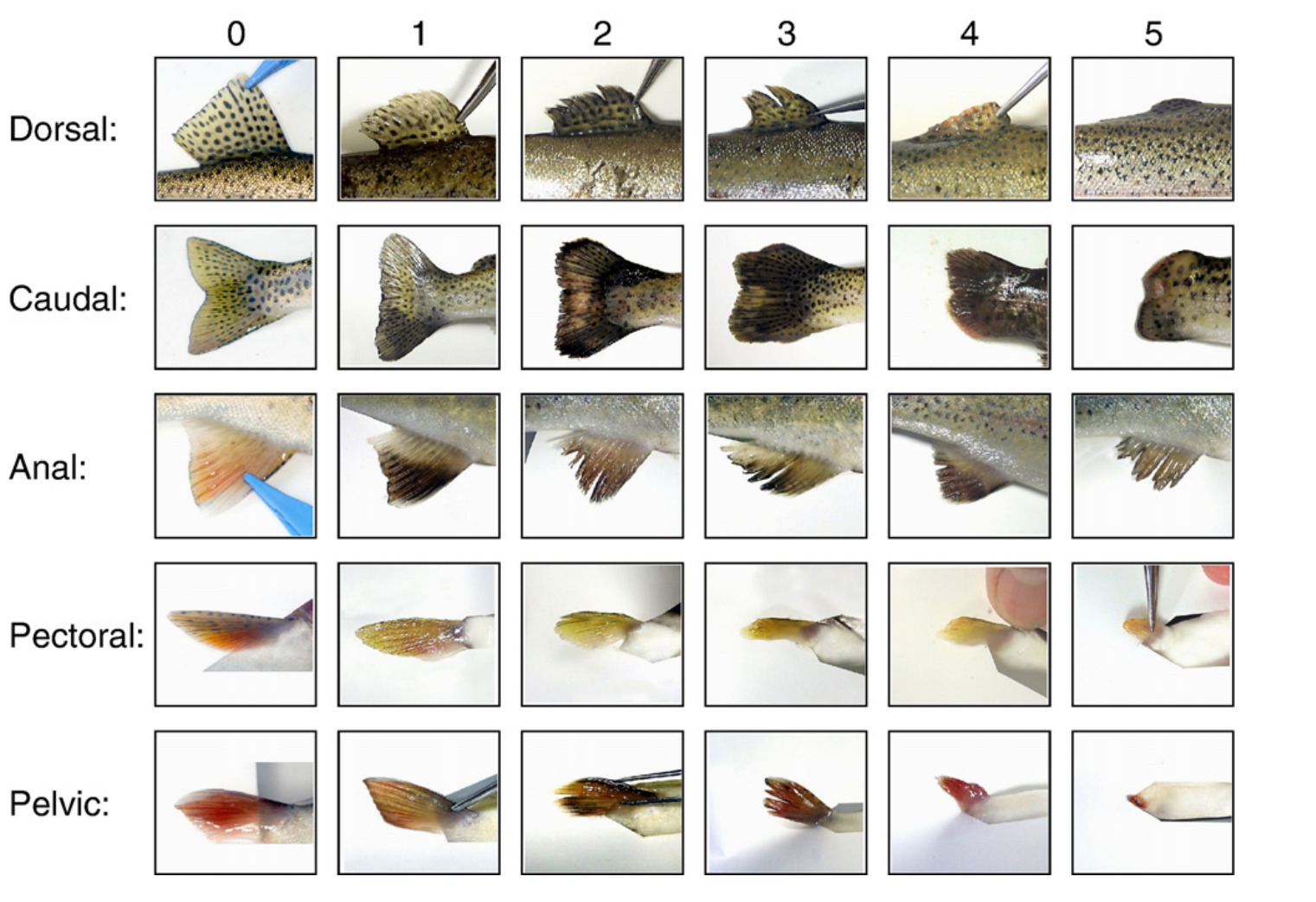
- Figure: Protocol for scoring fin damage in juvenile rainbow trout. Reproduced from Hoyle et al., (2007). 0 corresponds to level 0, 1 to level 1, 2–4 to level 2, and 5 to level 3.
Key evidence
| Source | Summary of source | Key result |
|---|---|---|
| Weirup, 2022 | Cross-sectional study investigating chronic stress in ongrowing rainbow trout across 8 commercial freshwater systems in Germany. 10 adult female rainbow trout (~18 months old) were sampled per system. Fish were examined for external morphological damage, including fin damage, and sampled for scale cortisol using advanced laboratory techniques. |
Chronic stress (estimated through scale cortisol) correlated strongly with total fin injury across all farms. Fin injuries were common and varied significantly between farms, while other types of morphological damage were rare. Limited water supply and exchange, poor water quality, high stocking densities, and high feeding frequencies increased stress and fin damage. |
| Cvetkovikj et al., 2015 | Questionnaire-based survey investigating the relationship between husbandry practices and fin damage that was conducted across 7 commercial trout farms in Macedonia. | Lower levels of daily feed ration, increased number of meals, and grading frequency were the strongest predictors of fin damage across different fins. Fin damage reflects aggression and competition during feeding and suboptimal husbandry practices. |
| Person-Le Ruyet et al., 2008 | Experimental study investigating the impacts of different water quality levels and stocking densities on ongrowing rainbow trout (111.5 g) in freshwater conditions over 84 days. Three stocking densities were tested: 25, 75, and 120 kg/m³. Two water quality levels were tested: high (with oxygen concentration of 12 mg/L and total ammonia nitrogen of 0.3 mg/L) and low (with oxygen concentration of 6 mg/L and total ammonia nitrogen of 0.6 mg/L). |
Higher stocking density and better water quality both correlated with increased fin damage over time. The authors hypothesized that higher fin damage under better water quality conditions resulted from higher fish metabolic activity and greater activity during feeding compared to the low water quality group, which led to more physical contact. Pectoral fins deteriorated faster than dorsal fins under poorer conditions. |
Supporting evidence
- Andrews, M., M. Stormoen, H. Schmidt-Posthaus, T. Wahli, and P. J. Midtlyng. “Rapid Temperature-Dependent Wound Closure Following Adipose Fin Clipping of Atlantic Salmon Salmo salar L.” Journal of Fish Diseases 38, no. 6 (June 11, 2014): 523–31. https://doi.org/10.1111/jfd.12261.
- Arnold, G. P., Paul W. Webb, and B. H. Holford. “The Role of the Pectoral Fins in Station-Holding of Atlantic Salmon Parr (Salmo salar L.).” Journal of Experimental Biology 156, no. 1 (March 1, 1991): 625–29. https://doi.org/10.1242/jeb.156.1.625.
- Cvetkovikj, Aleksandar, Miroslav Radeski, Dijana Blazhekovikj-Dimovska, Vasil Kostov, and Vangjel Stevanovski. “Factors Affecting Fin Damage of Farmed Rainbow Trout.” Macedonian Veterinary Review 38, no. 1 (November 24, 2014): 61–71. https://doi.org/10.14432/j.macvetrev.2014.11.032.
- Cvetkovikj, Aleksandar, Miroslav Radeski, Dijana Blazhekovikj-Dimovska, Vasil Kostov, and Vangjel Stevanovski. “Fin Damage of Farmed Rainbow Trout in the Republic of Macedonia.” Macedonian Veterinary Review 36, no. 2 (2013): 73–83.
- Hoyle, I., B. Oidtmann, T. Ellis, J. Turnbull, B. North, J. Nikolaidis, and T.G. Knowles. “A Validated Macroscopic Key to Assess Fin Damage in Farmed Rainbow Trout (Oncorhynchus mykiss).” Aquaculture 270, no. 1-4 (September 2007): 142–48. https://doi.org/10.1016/j.aquaculture.2007.03.037.
- Koll, Raphael, Ronald M. Brunner, Alexander Rebl, Marieke Verleih, Frieder Hadlich, Joan Martorell-Ribera, and Tom Goldammer. “Resection of the Adipose Fin from Rainbow Trout Acutely Alters the Cerebral Transcriptome and Respiratory Frequency.” Aquaculture 594 (August 10, 2024): 741472. https://doi.org/10.1016/j.aquaculture.2024.741472.
- Latremouille, David N. “Fin Erosion in Aquaculture and Natural Environments.” Reviews in Fisheries Science 11, no. 4 (October 1, 2003): 315–35. https://doi.org/10.1080/10641260390255745.
- Laursen, Danielle Caroline, Patricia I. M. Silva, Bodil K. Larsen, and Erik Höglund. “High Oxygen Consumption Rates and Scale Loss Indicate Elevated Aggressive Behaviour at Low Rearing Density, While Elevated Brain Serotonergic Activity Suggests Chronic Stress at High Rearing Densities in Farmed Rainbow Trout.” Physiology & Behavior 122 (October 2013): 147–54. https://doi.org/10.1016/j.physbeh.2013.08.026.
- MacIntyre, Craig. “Water Quality and Welfare Assessment on United Kingdom Trout Farms.” PhD Thesis, 2008. https://dspace.stir.ac.uk/bitstream/1893/434/1/FINAL%20THESIS.pdf.
- Moutou, K. A., I. D. McCarthy, and D. F. Houlihan. “The Effect of Ration Level and Social Rank on the Development of Fin Damage in Juvenile Rainbow Trout.” Journal of Fish Biology 52, no. 4 (April 1, 1998): 756–70. https://doi.org/10.1111/j.1095-8649.1998.tb00818.x.
- Nilsson, Jonatan, Kristine Gismervik, Kristoffer Vale Nielsen, Martin Haugsmo Iversen, Chris Noble, Jelena Kolarevic, Hilde Frotjold, et al. 2025. “Laksvel — a Standardised, Operational Welfare Monitoring Protocol for Atlantic Salmon Held in Sea Cages.” Institute of Marine Research. https://www.hi.no/en/hi/nettrapporter/rapport-fra-havforskningen-en-2025-40.
- Noble, C., K. Gismervik, M. H. Iversen, J. Kolarevic, J. Nilsson, L. H. Stien, and J. F. Turnbull. 2020. “Welfare Indicators for Farmed Rainbow Trout: Tools for Assessing Fish Welfare.” Nofima. https://nofima.no/wp-content/uploads/2020/05/Welfare-Indicators-for-farmed-rainbow-trout-Noble-et-al.-2020.pdf.
- Person-Le Ruyet, Jeannine, Laurent Labbé, Nicola Le Bayon, Armelle Sévère, Annick Le Roux, Hervé Le Delliou, and Loic Quéméner. “Combined Effects of Water Quality and Stocking Density on Welfare and Growth of Rainbow Trout (Oncorhynchus mykiss).” Aquatic Living Resources 21, no. 2 (April 1, 2008): 185–95. https://doi.org/10.1051/alr:2008024.
- Person-Le Ruyet, Jeannine, Nicolas Le Bayon, and Sylvie Gros. “How to Assess Fin Damage in Rainbow Trout, Oncorhynchus mykiss?” Aquatic Living Resources 20, no. 2 (April 2007): 191–95. https://doi.org/10.1051/alr:2007031.
- Weirup, Lina. “Development of a Fish Welfare Evaluation Index for Rainbow Trout (Oncorhynchus mykiss) in Aquaculture.” PhD Thesis, 2022. https://d-nb.info/1262308445/34.
-
Nilsson, Jonatan. 2026. Rainbow trout pectoral fin, score 0. Photograph. Personal communication, Institute of Marine Research.
-
Nilsson, Jonatan. 2026. Rainbow trout dorsal fin, score 0. Photograph. Personal communication, Institute of Marine Research.
-
Cbunt biotactic. Rainbow Trout Georgian Bay. 2010. Photograph. https://commons.wikimedia.org/wiki/File:Rainbow_Trout_Georgian_Bay.jpg.
-
Nilsson, Jonatan. 2026. Rainbow trout anal fin, score 0. Photograph. Personal communication, Institute of Marine Research.
-
Nilsson, Jonatan. 2026. Rainbow trout pectoral fin, score 1. Photograph. Personal communication, Institute of Marine Research.
-
Nilsson, Jonatan. 2026. Rainbow trout dorsal fin, score 1. Photograph. Personal communication, Institute of Marine Research.
-
Nilsson, Jonatan. 2026. Rainbow trout caudal fin, score 1. Photograph. Personal communication, Institute of Marine Research.
-
Nilsson, Jonatan. 2026. Rainbow trout anal fin, score 1. Photograph. Personal communication, Institute of Marine Research.
-
Nilsson, Jonatan. 2026. Rainbow trout pectoral fin, score 2. Photograph. Personal communication, Institute of Marine Research.
-
Nilsson, Jonatan. 2026. Rainbow trout dorsal fin, score 2. Photograph. Personal communication, Institute of Marine Research.
-
Nilsson, Jonatan. 2026. Rainbow trout caudal fin, score 2. Photograph. Personal communication, Institute of Marine Research.
-
Nilsson, Jonatan. 2026. Rainbow trout anal fin, score 2. Photograph. Personal communication, Institute of Marine Research.
-
Nilsson, Jonatan, Kristine Gismervik, Kristoffer Vale Nielsen, Martin Haugsmo Iversen, Chris Noble, Jelena Kolarevic, Hilde Frotjold, et al. 2025. “Laksvel — a Standardised, Operational Welfare Monitoring Protocol for Atlantic Salmon Held in Sea Cages.” Institute of Marine Research. https://www.hi.no/en/hi/nettrapporter/rapport-fra-havforskningen-en-2025-40.
-
Nilsson, Jonatan. 2026. Rainbow trout dorsal fin, score 3. Photograph. Personal communication, Institute of Marine Research.
-
Nilsson, Jonatan. 2026. Rainbow trout caudal fin, score 3. Photograph. Personal communication, Institute of Marine Research.
-
Nilsson, Jonatan. 2026. Rainbow trout anal fin, score 3. Photograph. Personal communication, Institute of Marine Research.